

blog
Polyurethane Cornice vs Plaster – Which Is Best?
Aug
A cracked cornice line, an uneven ceiling edge or a room that simply feels unfinished can make a full renovation look less considered. When comparing polyurethane cornice vs plaster, the right choice is not only about the final look. It affects how quickly the moulding can be fitted, how it performs over time, and how much disruption the work creates.
Both materials can produce an elegant, high-end result. Plaster cornice has a long history in period homes and restoration work, while modern polyurethane mouldings offer crisp detail with much lower weight and simpler handling. For most refurbishment, decorating and new-build interior projects, the practical advantages of polyurethane are difficult to overlook.
Polyurethane Cornice vs Plaster: The Key Differences
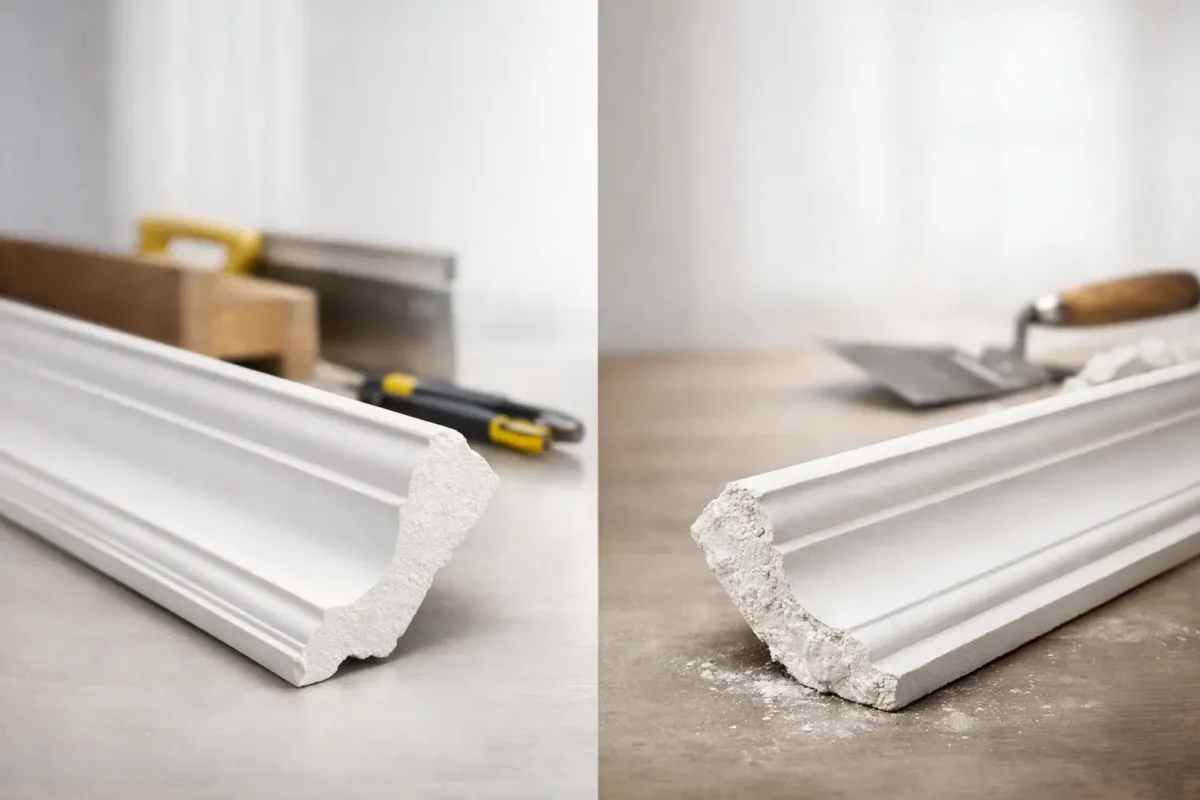
The most visible difference is often not visible once the cornice has been properly installed and painted. Quality polyurethane cornice is designed to replicate the sharp profiles and architectural character associated with traditional plasterwork. The real contrast lies in the material itself.
Plaster cornice is generally made from gypsum plaster, often reinforced with hessian or a similar backing. It is dense, heavy and rigid. This gives it a traditional feel, but it also means that lengths require careful transport, confident handling and secure fixing. A dropped section can chip, crack or break before it reaches the ceiling.
Polyurethane is a high-density polymer foam used for premium decorative mouldings. It is lightweight yet firm, with a smooth, closed-cell surface that accepts paint well. It can be cut with standard fine-tooth tools, carried by one person in many cases and bonded into place using the correct adhesive.
| Consideration | Polyurethane cornice | Plaster cornice | |—|—|—| | Weight | Lightweight and easy to handle | Heavy and more difficult to lift | | Installation | Suitable for competent DIY fitting and trade work | Usually best fitted by a specialist plasterer | | Durability | Resistant to knocks and small impacts | Can chip or crack if knocked | | Moisture resistance | Well suited to kitchens, bathrooms and humid rooms | Can be affected by persistent damp | | Detail | Crisp, consistent factory-finished profiles | Excellent traditional detail, especially for bespoke work | | Repairs | Straightforward to fill, sand and repaint | Repairs can require more specialist matching |
Installation: Where Polyurethane Has a Clear Advantage
Fitting is often the deciding factor for homeowners and trade professionals. Plaster cornice is heavy enough that longer lengths may need two people to lift safely. It is commonly installed with a combination of plaster adhesive, mechanical fixings and specialist techniques. The process can be messy, and errors at mitred corners are not always easy to correct.
Polyurethane cornice is far more manageable. Its low weight reduces strain during installation and makes it practical for decorating teams, fit-out contractors and confident DIY customers. Once the ceiling and wall surfaces are clean, dry and sound, the moulding is normally fixed with a suitable cartridge adhesive. Joints are bonded, aligned and finished with filler where required before painting.
This does not mean polyurethane is a shortcut to a poor finish. Accurate measuring, clean cuts and careful jointing still matter. A decorative profile will draw attention to a wavy ceiling or poorly prepared wall, whatever material is used. However, polyurethane gives the installer more control and makes small adjustments easier before the adhesive cures.
For large, ornate plaster designs or listed-building restoration, a specialist plasterwork installer may still be the right choice. But for the majority of standard room cornice projects, lightweight mouldings significantly reduce labour, access issues and fitting time.
Cutting corners and awkward rooms
No room is perfectly square, especially in older UK properties. External corners, chimney breasts, bay windows and uneven ceiling lines all need consideration. Both plaster and polyurethane can be mitred, but polyurethane is easier to cut accurately on site using a mitre box or saw.
A small mistake in a plaster length can be costly because the piece is heavy, brittle and less forgiving. With polyurethane, installers can dry-fit sections, refine cuts and use the appropriate joint adhesive to form a secure, neat connection. This is particularly useful when working around complex layouts or fitting cornice in occupied homes where keeping disruption low matters.
Durability in Everyday Homes and Commercial Spaces
Plaster remains a strong decorative material when it is undamaged and installed in a dry, stable environment. Yet it is prone to chipping from ladders, furniture moves and accidental impacts. Fine cracks can also appear where a building moves slightly over time, particularly around joints.
Polyurethane is made for the realities of modern interiors. It is resistant to minor knocks and does not have the same brittle character as plaster. It is also unaffected by normal humidity, making it a reliable option for bathrooms, kitchens, utility rooms and commercial environments where moisture levels may vary.
That does not make polyurethane indestructible. It can still be damaged by sharp impacts or poor installation, and movement cracks can occur if the background surface is unstable. The advantage is that small surface damage is normally easier to fill, sand and repaint without needing a plaster specialist.
Style, Scale and Finish
A common concern is whether polyurethane can look as good as plaster. With a premium, high-density moulding, the answer is yes. Once painted, the material itself should not be the focus. What people notice is the profile, proportion, corner finish and quality of decoration.
For a Victorian terrace, a tall-ceilinged hallway or a formal reception room, choose a profile with enough projection and drop to suit the room. A narrow, understated coving may disappear in a generous space, while a deep ornate cornice can overwhelm a compact bedroom with low ceilings.
Plaster is still valuable where an exact historic profile must be replicated or where a one-off, hand-run design is required. Those projects call for specialist assessment and often justify the additional cost. For homeowners who want a period-inspired finish without commissioning bespoke plasterwork, polyurethane provides a wide choice of classical and contemporary profiles.
It also gives more design flexibility. Lightweight mouldings can be used not only at the ceiling line but for wall panelling, door surrounds, skirting details and indirect LED lighting features. These applications would be significantly more difficult and labour-intensive in traditional plaster.
Cost: Look Beyond the Price Per Metre
Comparing material prices alone can be misleading. Plaster cornice may appear competitive for certain basic profiles, but the total project cost can rise through delivery, handling, breakages, specialist labour and longer installation times. Access can also be a concern on upper floors or in properties with tight staircases.
Polyurethane mouldings may have a higher initial price than entry-level plaster alternatives, particularly for detailed profiles. However, they often offer better value once fitting time and practical costs are included. Less weight means easier delivery and handling, while faster installation can reduce labour charges for trade projects.
For DIY customers, the savings can be even more significant. A well-planned polyurethane installation can be completed without the need to hire a plasterer, provided the surfaces are prepared correctly and the recommended adhesives and tools are used. It is worth allowing for adhesive, joint treatment, caulk, paint and a suitable cutting tool when budgeting.
Which Material Should You Choose?
Choose plaster when authenticity, heritage requirements or bespoke replication are the priority. It remains a credible option for sensitive restoration work, particularly where existing original plaster cornice needs to be matched exactly.
Choose polyurethane when you want a durable, paintable and premium-looking cornice that is easier to transport, cut and install. It is especially well suited to occupied renovations, modern homes, bathrooms, commercial fit-outs and projects where programme time matters.
For most customers, the decision comes down to achieving a refined result without unnecessary weight, mess or risk of breakage. Coving.Online supplies authentic Orac Decor polyurethane mouldings alongside the adhesives and practical support needed to achieve a professional finish.
Before ordering, measure each wall run carefully, check the ceiling height and consider the room from the doorway rather than only at close range. A well-proportioned cornice, fitted neatly and painted with care, can make even a straightforward room feel properly finished.
