

Home Decor
Three Decisions That Make Exterior Door Surrounds Work for UK Homes

Sep
Choose a surround style that echoes your house’s period, specify an exterior-grade material built to survive UK weather, and settle the proportions and weatherproofing details before you order a single length of moulding. Get those three decisions right and every other choice, from paint colour to hardware, falls into place. Style ideas follow below, with practical installation guidance in the middle sections.
TL;DR:
- Choosing a surround style that matches your house’s period and material that withstands UK weather ensures long-lasting durability and cohesive design.
- Materials like cellular PVC and fibre-cement offer low-maintenance, weather-resistant profiles, while timber requires regular re-coating, and stone adds weight but provides durability.
- Proper proportions involve balancing the width of side casings and head depth, ensuring the surround complements the door and facade without overwhelming or underdressing it.
- Correct installation sequencing, flashing, and sealing, especially at the head, are crucial to prevent leaks and ensure the surround remains intact over many winters.
- Finishing touches such as matching colours, traditional hardware, and seasonal decor enhance the surround’s visual impact and overall kerb appeal.
Table of Contents
- Exterior door surround ideas by architectural style
- Materials and durability for external surrounds
- Getting the proportions right around your door
- Practical installation and weatherproofing that actually lasts
- Finishing touches that complete the surround
- Carl’s installer tip
- Bring your surround idea to life with Coving.Online
- Sources
Exterior door surround ideas by architectural style
The style you choose should answer to your house, not a Pinterest board. Exterior door mouldings tend to fall into two camps: profiles that carve shadow lines into the facade for architectural depth, and profiles that add texture and warmth through material choice rather than carving. Knowing which camp your house belongs to narrows the decision considerably.
- Colonial, Georgian and classical: pilasters either side of the door, topped with a proper entablature dressed in stone or painted polyurethane moulding. This is the surround style for symmetrical brick or stone facades where formality matters.
- Victorian and Edwardian: layered mouldings, a fanlight above the door, and contrast paint between the door and its frame. These properties reward detail, so a flat, single-profile casing will look underdressed.
- Modern minimalist: flat casing with slim, crisp profiles, usually in cellular PVC or fibre-cement. The appeal is precision rather than ornament.
- Rustic: reclaimed or naturally weathered timber species finished in oil rather than gloss paint, suited to cottages, barns and countryside settings.
- Stone surrounds and arches: the most durable option for genuinely exposed, weather-battered entrances, and they read best on properties with masonry elevations rather than rendered or timber-clad ones.
Choosing a door itself matters just as much as the surround around it, and a door style guide is worth a look before you commit to either.
Materials and durability for external surrounds
Every material trades something for something else. Timber gives you genuine visual warmth and the ability to carve fine detail, but it demands recoating every few years and careful species selection for the local climate.
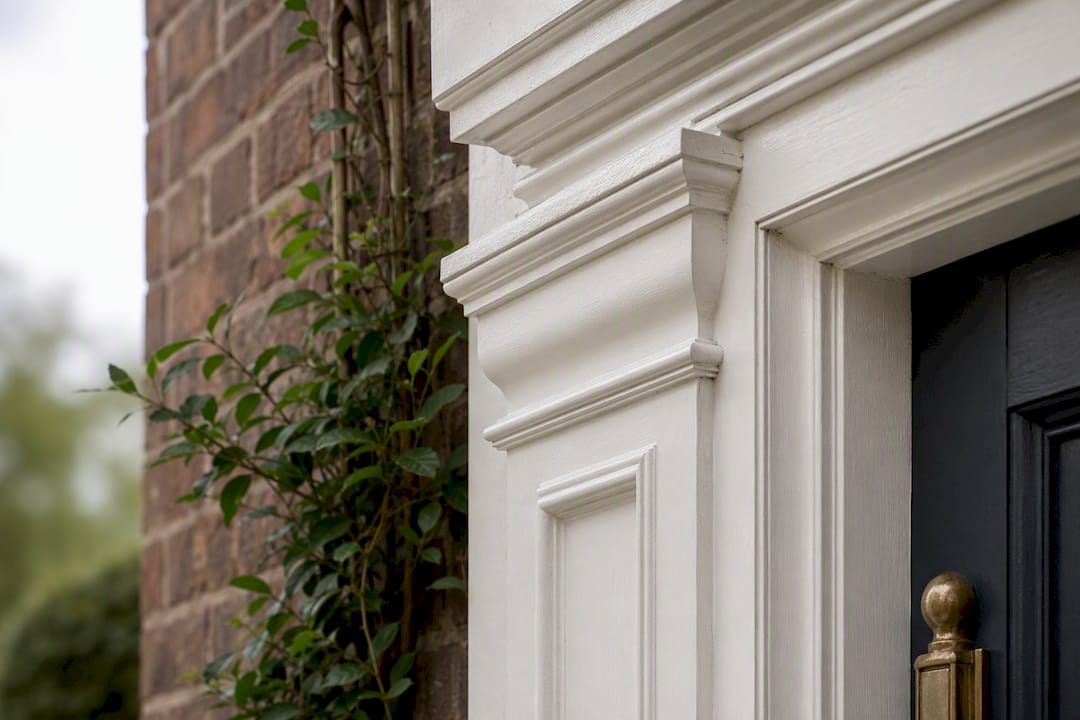
Cellular PVC and fibre-cement have become the default for anyone who wants a crisp, modern profile without a maintenance schedule attached. Both stay dimensionally stable through wet British winters and hold paint far longer than softwood.
Natural stone and engineered stone sit at the premium end. Granite and sandstone are genuinely durable in exposed positions, but marble is better suited to sheltered or interior settings unless it’s carefully sealed and maintained against weather.
- Timber: warm appearance, needs painting or oiling every 3 to 5 years depending on exposure.
- Cellular PVC: virtually maintenance free, ideal for modern flat casing.
- Fibre-cement: stable and paintable, good for both modern and traditional profiles.
- Natural stone: heaviest and most durable, but adds weight considerations for the structural opening.
Pro Tip: Before ordering any exterior moulding, check its stated weatherability rating rather than assuming “exterior grade” means the same thing across every supplier. We’ve found that spec sheets vary more than most homeowners expect.
Getting the proportions right around your door
A surround that’s too narrow for the door looks like an afterthought; one that’s too wide overwhelms the opening. A few rules of thumb keep the scale honest.
- Width of the side casing typically runs within a moderate range suitable for standard domestic doors, scaling appropriately on larger period openings.
- Head depth (the horizontal piece above the door) is generally proportioned larger than the side casing to give a sense of weight without overwhelming the door.
- Treat the whole elevation as one trim family. Match widths and profiles across the door and nearby windows so the facade reads as coordinated rather than assembled from mismatched parts.
- Extend the surround to include sidelights or a transom where the hallway is narrow or dark. Widening the surround this way makes the entry appear larger and pulls noticeably more daylight into the hall, and fibre-cement or cellular PVC both perform well for these larger, extended frames.
Coordinating trim across an elevation is the same logic we apply indoors when matching skirting profiles to a room’s scale, and it pays off outside just as reliably.
Practical installation and weatherproofing that actually lasts
Sequencing decides whether a surround survives ten winters or ten months. Plan the trim and the cladding together, before either goes up, because installation order determines how well the layers overlap. Agree flashing details with whoever is fitting the cladding first. Retrofitting flashing behind trim that’s already fixed is where most leaks originate, and it’s a far more awkward job than getting it right the first time.
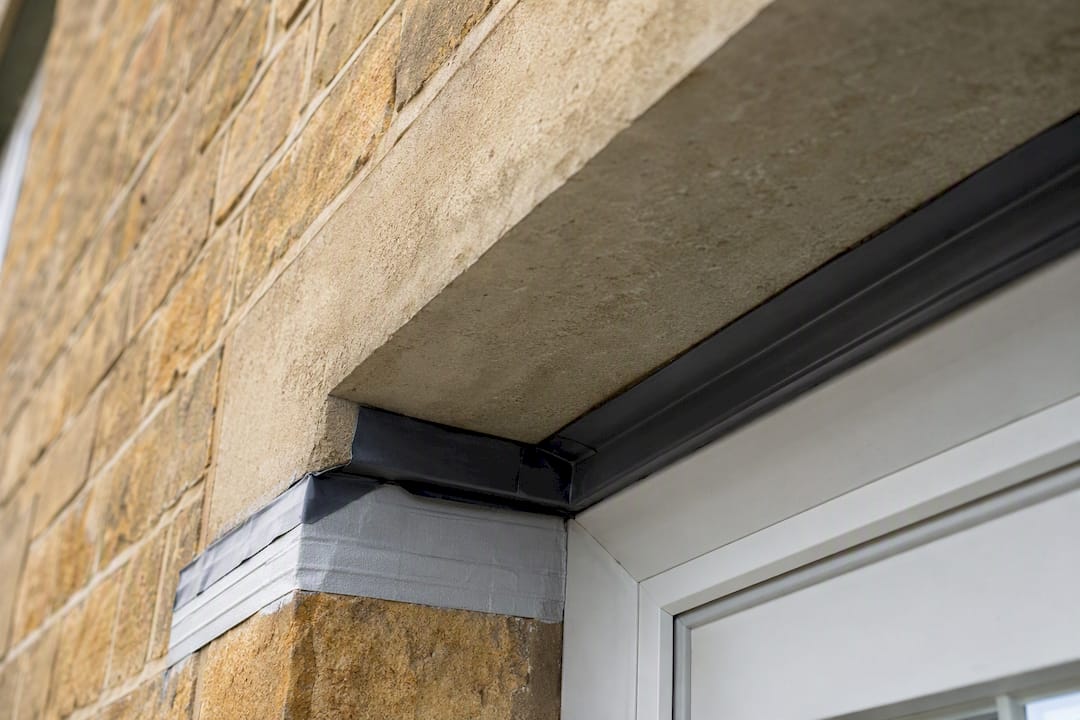
The head of the surround is the single most exposed point on the whole frame. Flash it properly and use a sealant compatible with your chosen material, because confirming the trim sits over the flashing, not under it, ensures water sheds outward rather than working its way behind the moulding.
- Specify corrosion-resistant fasteners, stainless steel or coated screws rather than standard zinc plated ones exposed to rain.
- Leave a small gap or drip edge at the base of any timber pilaster or column so moisture can’t wick upward into the grain.
- Consider a sacrificial or non-penetrating plinth where a timber surround meets a wet threshold or step.
- Sequence cladding first where possible, then fit trim over the flashing rather than trying to slot trim into a finished, sealed elevation.
Pro Tip: In our experience, the surrounds that fail early almost always fail at the head detail, not the sides. If you’re only checking one joint before you commit to paint, check that one.
Heavy stone surrounds and anything involving complex flashing around an existing cladding system are where it’s worth bringing in a professional installer rather than tackling it solo. The margin for error on a stone lintel is measured in millimetres, not inches.
Finishing touches that complete the surround
Colour strategy makes or breaks the whole composition Contrast, a dark door against a pale surround, or vice versa, draws the eye and works well on period properties with clean architectural lines. Tone-on-tone, where the door and surround share a family of colour, suits modern minimalist facades where the goal is calm rather than drama. Editorial coverage of front door design consistently points to hard-wearing exterior gloss and carefully matched door furniture as the difference between a considered entrance and an unfinished one.
Hardware and lighting should follow the surround’s period rather than fight it. A Georgian pilaster surround wants a traditional lantern and a substantial letterplate; a flat modern casing wants a slim, low-profile light fitting and minimal ironmongery.
- Swap tired letterplates and numerals for finishes that match your door furniture.
- Add symmetrical planters either side of the surround to frame the door without competing with the mouldings.
- Layer in a wall light or lantern sized to the scale of the surround, not just the door.
- Rotate seasonal wreaths or foliage, a low-cost way to refresh the look several times a year.
Small projects like these, sconces, planters and trim adjustments, consistently show up in kerb appeal advice because they finish a scheme without requiring structural change.
Carl’s installer tip
In our experience, the most common mistake is sealing a timber surround tight to the wall with no drip edge, trapping moisture against the grain. Fix it by leaving a small air gap at the base and using a flexible, paintable exterior sealant at the head joint, never a rigid one that cracks as timber moves.
— Carl
Bring your surround idea to life with Coving.Online
Coving is the practical route from inspiration to an installed surround, without you having to source mouldings from three different suppliers and hope they match. Our range includes Orac Decor and NOËL & MARQUET exterior-grade profiles engineered specifically for weather exposure, so the durability advice above is already built into the product rather than something you have to figure out on site.

Whether you’re after Georgian pilasters, a flat modern casing, or a stone-effect surround for a period facade, browse our door surround mouldings to find a profile that matches your elevation. If the flashing or fixing details feel beyond a weekend project, our Elite Decor UK installer network can quote for a professional fit, so the surround performs as well as it looks. Start by checking available profiles and installation options for your door.
Sources
- Exterior trim planning guide | Build Design Hub
- Spar Windows — Sidelights
- Front door design ideas for inviting first impressions — House & Garden
- 20 Front Door Ideas to Make Your Entryway More Inviting — Better Homes & Gardens
- Types of marble and stone door surrounds — Marblebee
