
blog
Orac Decor Wall Panels for Smarter Interiors
Jul
A plain wall can make even a well-furnished room feel unfinished. Orac Decor wall panels solve that problem by adding architectural detail quickly, cleanly and with far less disruption than traditional plasterwork. For homeowners, designers and trade installers, they offer a practical way to create a more considered interior without taking on the weight, drying time and fragility that often come with older methods.
What makes them especially useful is the balance between appearance and usability. You get crisp profiles, reliable consistency and a surface that is ready for finishing, but the installation process remains manageable for both experienced fitters and confident DIY buyers. That matters on real projects, where time on site, wall condition and finish quality all affect the final result.
Why Orac Decor wall panels are so widely used
Orac Decor has built a strong reputation in decorative mouldings because the products are designed for modern renovation, not just for showroom images. The panels and moulding elements are lightweight, dimensionally stable and made to give a sharp, premium finish once installed and painted. In practical terms, that means easier handling, neater joints and less risk of the cracking and edge damage often associated with plaster alternatives.
This is one of the main reasons Orac Decor wall panelling works across very different settings. In a period property, it can bring back the sense of structure and proportion that a room may have lost over time. In a newer home, it can add depth and character without feeling overly traditional. In commercial interiors, it offers a clean decorative solution that is efficient to specify and easier to work with on tighter programmes.
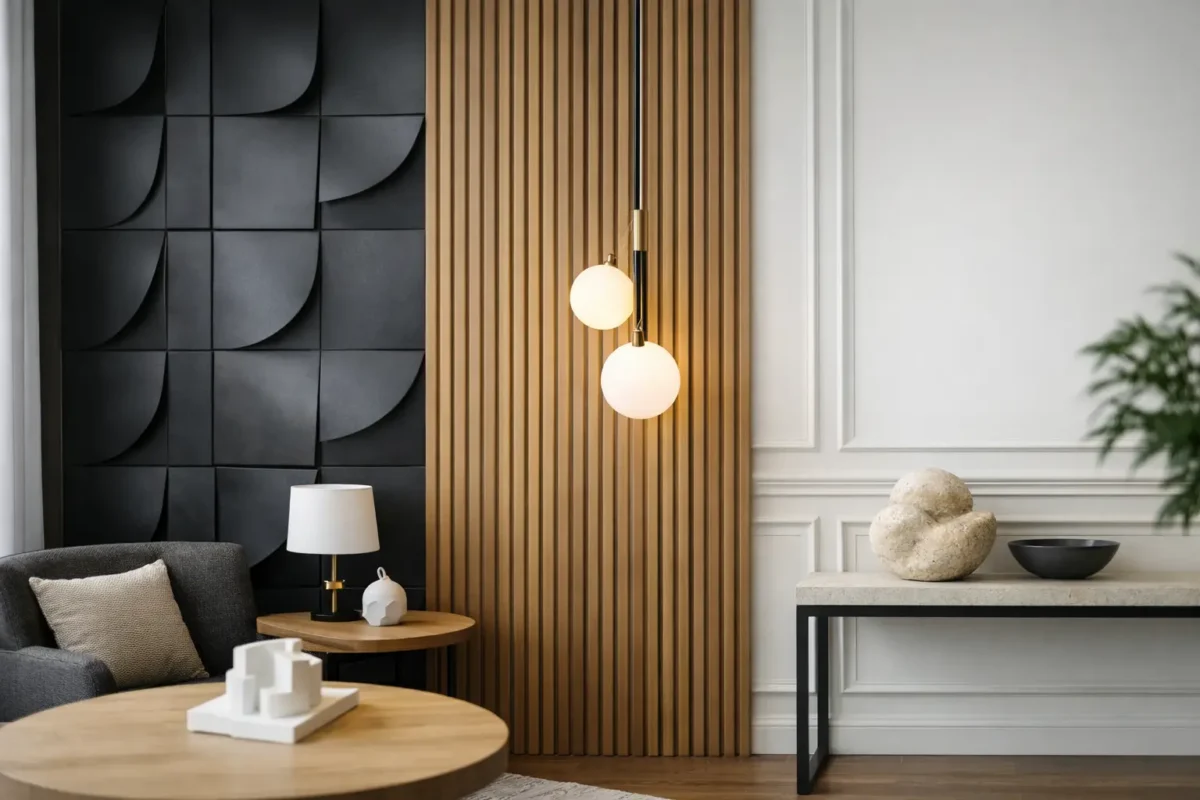
There is also flexibility in how the look is achieved. Some projects use full panel moulding layouts across an entire room. Others keep it simple with a single feature wall, a dado-height arrangement in a hallway, or a framed pattern behind a bed or sofa. The same product family can support subtle detailing or more statement-led designs depending on spacing, scale and paint choice.
Choosing the right Orac Decor wall panels for your room
The best panel layout depends less on trends and more on proportion. High ceilings can carry taller, wider panel frames without feeling crowded, while lower ceilings usually benefit from simpler arrangements with more breathing space. If the room is narrow, overly busy panelling can emphasise that limitation. A cleaner pattern often gives a better result.
Wall condition matters too. If you are working with older properties, you may be dealing with uneven surfaces, previous repairs or slight movement. Lightweight mouldings are an advantage here because they are easier to position and fix accurately, but preparation still matters. The straighter the setting out and the better the substrate, the more convincing the final finish will be.
Style is the other major factor. Traditional panel mouldings usually suit formal reception rooms, staircases and bedrooms where you want a more classic architectural feel. Simpler, sharper profiles work well in contemporary schemes, especially when paired with full-height colour drenching or minimalist joinery. There is no single right answer. It depends on whether the wall detail is meant to be a quiet backdrop or a clear focal point.
Where wall panelling works best
Living rooms are an obvious choice because panelling can frame furniture and help a large wall feel intentional rather than empty. Hallways and landings also respond well, particularly where the aim is to make circulation spaces feel finished rather than purely functional. Bedrooms are another strong application, with panel layouts often used to define the bed wall and add depth without needing bulky headboard treatments.
Bathrooms and kitchens need a more considered approach. Decorative wall mouldings can work in these spaces, but only if moisture, ventilation and finishing products are taken seriously. In commercial settings such as hospitality, reception areas or boutique retail, the appeal is slightly different. The panelling adds visual quality quickly, while the material properties support a more efficient installation process.
The practical advantage over plaster
Plaster still has its place, particularly on certain heritage projects, but for many interior upgrades it is simply harder work than it needs to be. It is heavier, more delicate in transit and often more demanding to fit. That can increase labour time, create more site mess and introduce avoidable complications during installation.
With Orac Decor products, the handling is easier from the start. Transporting lengths around a property is more straightforward, cutting is simpler, and fixing with the correct adhesive system is generally quicker than working with plaster sections. For trade installers, that helps with efficiency and consistency. For DIY customers, it makes premium decorative detail much more accessible.
The other practical benefit is durability in everyday use. In busy homes and commercial environments, wall detailing needs to cope with knocks, decoration cycles and general wear. A lightweight, hard-wearing moulding system is often the more sensible long-term choice, especially where appearance matters but maintenance also needs to stay realistic.
Installation: simple in principle, precise in practice
Wall panelling is not difficult to understand, but it does reward accuracy. The first stage is always setting out. Before anything is fixed, it is worth marking the full layout on the wall so that panel sizes, spacing and margins can be checked visually. This is the point where small mistakes are easiest to correct. Once mouldings are cut and bonded in place, changes become slower and more expensive.
Adhesive choice is equally important. Using the correct adhesive and jointing products gives better adhesion, cleaner joins and a more professional finish after painting. Skipping that step to save a small amount upfront rarely pays off. The installation system is part of the result, not an afterthought.
Cutting accuracy also matters more than many buyers expect. Even with quality products, poor mitres and inconsistent spacing will stand out on a finished wall. That is why proper tools and careful measuring are so important. A well-executed simple layout usually looks better than an ambitious design fitted without precision.
DIY or professional fitting?
That depends on the room, the layout and your confidence with measuring and finishing work. A straightforward rectangular panel design on sound, flat walls is often within reach for a capable DIY installer. More complex rooms with chimney breasts, alcoves, uneven corners or multiple returns usually benefit from professional fitting.
For trade buyers, the appeal is usually speed, product consistency and a dependable finishing standard. For homeowners, the decision is often about risk. If this is a statement wall in a main living area, many prefer the reassurance of experienced installation support. If it is a smaller project and you are comfortable with cutting, filling and painting, DIY can make sense.
Getting the finish right
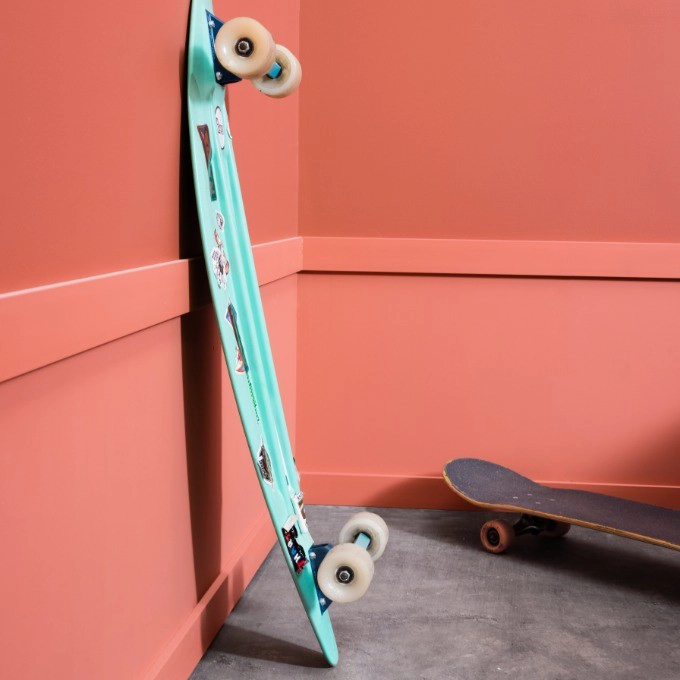
Paint transforms the mouldings from installed product into part of the room. Most buyers choose to paint the wall and panelling in the same shade for a cohesive architectural look, and that approach works especially well in lounges, bedrooms and hallways. Using one colour across the full wall helps the shadow lines do the work without making the scheme feel fussy.
A contrast finish can also work, but it needs more confidence. If the mouldings are highlighted in a different colour, every line and spacing choice becomes more visible. That can look excellent in formal interiors, though it is less forgiving of weak setting out or inconsistent joints.
Surface preparation remains key. Joints should be filled properly, adhesive residue removed and the surface finished neatly before painting begins. This is the stage that separates a decorative upgrade from a genuinely professional result.
What to consider before buying
The first question is not which profile looks nicest on its own. It is whether the scale suits the room. A profile that looks impressive in isolation can feel oversized once repeated across a smaller wall. Always consider ceiling height, furniture placement and how much uninterrupted wall area you actually have.
The second is installation planning. Think about corners, sockets, radiators and any existing trim that could affect the layout. If the wall is poor, allow for preparation. If the project is on a schedule, make sure adhesives, tools and finishing materials are planned at the same time as the mouldings.
The third is support. Buying from a specialist source matters because guidance on compatibility, quantities and fitting can save a lot of avoidable trial and error. That is one of the reasons customers use specialists such as Coving.Online for Orac Decor systems rather than treating wall panelling as a generic decorating purchase.
Good wall detail changes how a room feels long after the paint has dried. If you choose the right profile, plan the layout properly and fit it with care, Orac Decor wall panels can give an interior the kind of structure and finish that looks considered from the moment you walk in.
