

blog
10 Wall Moulding Ideas for Living Room Style
Jul
A plain painted wall can make even a well-furnished room feel unfinished. The right wall moulding ideas living room schemes bring structure, proportion and a more considered finish, whether you are updating a period terrace, refining a new build or adding value before sale.
Wall mouldings work because they change how the room is read. They frame space, introduce rhythm and make standard plasterboard walls feel more architectural. Just as importantly, modern lightweight mouldings give you that decorative detail without the mess, weight and fragility of traditional plaster, which matters if you want a premium result with a more manageable installation.
What makes wall moulding ideas for living room spaces work
The best designs are not always the most elaborate. In most living rooms, success comes down to scale, ceiling height, furniture layout and how formal you want the room to feel.
A large detached house with generous ceiling height can carry deeper profiles and wider panel spacing. A smaller semi or flat usually benefits from slimmer sections and simpler layouts that keep the room feeling open. If the wall moulding is too heavy for the room, it can feel fussy. Too slight, and it disappears once the sofa, artwork and shelving are in place.
It is also worth thinking about where the eye naturally lands. In a living room, that is often the chimney breast, the main seating wall or the wall behind a television. Starting with one feature wall is often the most practical route if you want impact without overcomplicating the project.
Classic panel moulding for balanced, timeless detail
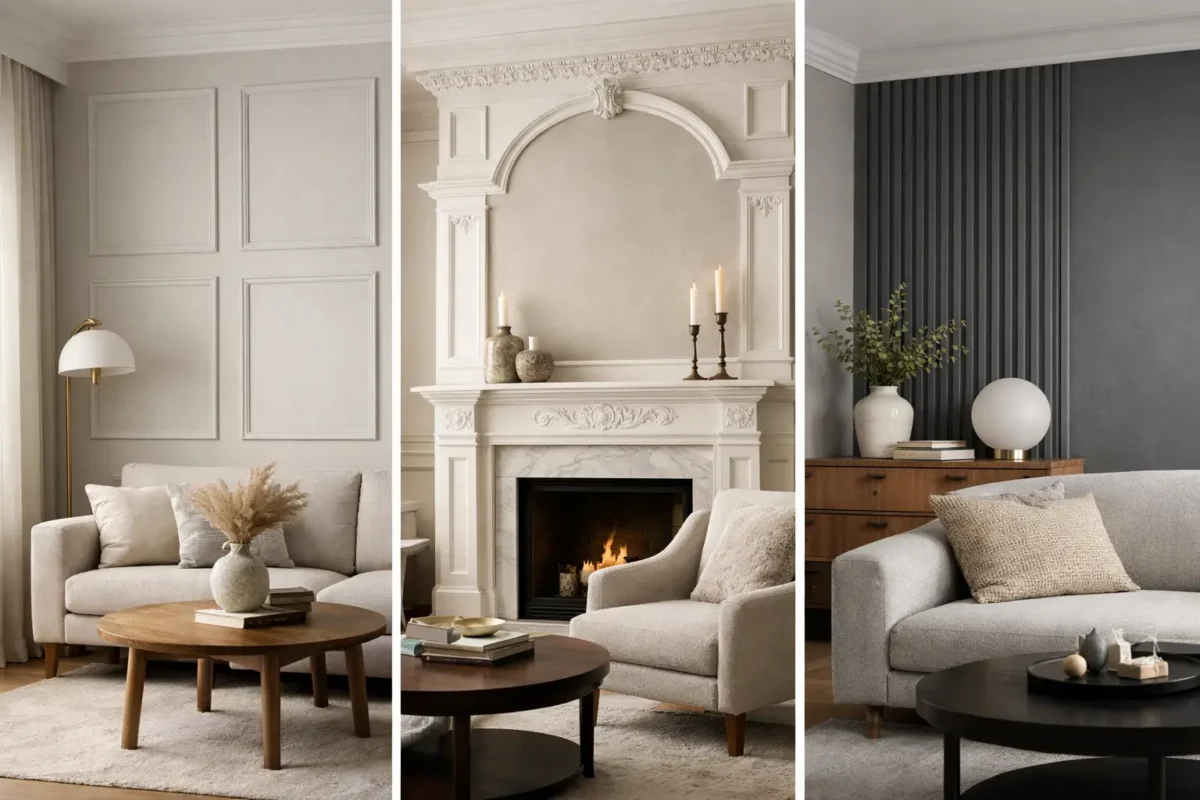
If you want wall moulding ideas living room projects can rely on for broad appeal, classic rectangular panel moulding is usually the safest place to start. This approach uses moulding lengths to create framed sections on the wall, often positioned in symmetrical rows.
It suits both traditional and modern interiors because the finish can be adjusted through profile choice and paint. A more ornate profile feels closer to period detailing, while a clean, shallow section looks sharper and more contemporary. Painted in the same colour as the wall, it gives subtle depth. Painted in a contrasting shade, it becomes a stronger decorative statement.
This style works particularly well on longer walls that need structure. It can also make a room feel more expensive without requiring major building work.
Best for
This is a strong option for lounges, reception rooms and open-plan living areas where you want a formal, designed finish.
Full wall panelling for a stronger feature
For more visual weight, full wall panelling creates a bolder architectural effect. This can mean floor-to-ceiling framed panels or a more continuous decorative wall treatment using mouldings, panel elements and trim.
The advantage is presence. Panelling gives a room clear identity, especially if the rest of the decor is fairly restrained. It also helps large walls feel intentional rather than empty. In modern homes, it can stop a boxy room from feeling flat. In older homes, it can restore a sense of period character that may have been lost through renovation.
The trade-off is that it asks more of the room. A heavily panelled wall can compete with busy wallpaper, oversized media units or too many decorative accessories. If your living room already has strong flooring, patterned upholstery and a fireplace surround, a simpler panel design may be the better call.
Dado-height moulding for practical elegance
Not every living room needs full-height detail. Dado-height moulding, usually fitted around the lower third of the wall, gives a neat architectural line and can be paired with panelling beneath or left as a clean horizontal break.
This is especially useful in homes where you want decorative detail without making the room feel too formal. It can also help visually anchor the space, which is useful in rooms with high ceilings or large blank wall sections.
From a practical point of view, this layout can be easier to plan around radiators, sockets and furniture. It also opens up more decorating options. You might keep the top half light and the lower section darker for contrast, or use one paint colour throughout for a quieter finish.
Picture frame mouldings behind sofas and fireplaces
One of the most effective wall moulding ideas for living room upgrades is to use picture frame mouldings only where they will be seen and appreciated most. Behind a sofa, around a fireplace or on either side of a chimney breast, these framed sections create focus without requiring every wall to be treated.
This suits homeowners who want a premium look but do not want the room to feel overdesigned. It is also useful for staged renovations, where you improve one area first and return to the rest later.
A common mistake is making the frames too small. In most living rooms, larger, well-spaced rectangles look more considered than multiple narrow boxes. You need enough breathing room around furniture and architectural features for the moulding to read clearly.
Contemporary square grid layouts
Not all moulding has to feel traditional. A square or rectangular grid layout using clean-lined profiles gives a more contemporary result, especially in modern extensions and recently built homes.
This look depends on discipline. Straight lines, equal spacing and a minimal profile are what make it successful. It works well in rooms with simple furniture, large windows and a restrained colour palette. If you are aiming for a crisp, design-led finish, this is often more suitable than ornate panelling.
Because the style is cleaner, installation accuracy becomes even more noticeable. Lightweight polyurethane mouldings are especially useful here because they are consistent, easier to handle and simpler to cut cleanly than heavier alternatives.
Wall moulding with integrated LED lighting
If you want decorative detail with a practical lighting benefit, mouldings designed for LED integration can transform a living room. While this is often associated with ceiling coving, it can also be used on wall features to create soft, indirect light and greater depth.
This approach works well in media walls, feature alcoves and modern living rooms where layered lighting matters. The moulding softens the look of LED strip lighting and gives the installation a more finished, architectural appearance.
It is not the right choice for every property. In very traditional rooms, integrated lighting can feel at odds with the architecture unless it is handled carefully. But in contemporary settings, or transitional interiors mixing classic and modern details, it can be an excellent fit.
Framing a television wall properly
Televisions often become the least attractive part of the living room by default. Wall moulding can help integrate them more neatly into the overall design.
Rather than treating the television wall as dead space, you can use moulding to frame the wider area, balance shelving or cabinetry, and create a feature that looks complete even when the screen is off. This is particularly useful in open-plan layouts where the sitting area needs stronger visual definition.
The key is proportion. You do not want delicate moulding lost around a large screen, and you do not want heavy detailing so close to technology that it feels forced. Usually, a simpler profile and wider framing gives the best result.
How to choose the right moulding profile
Profile choice changes everything. A decorative, curved section will read very differently from a crisp, linear profile, even in the same panel layout.
For period homes, traditional profiles often make sense, especially if you are echoing existing coving, skirting or door surrounds. In modern homes, simpler sections tend to sit more comfortably. If your room is somewhere in between, a transitional profile gives flexibility and is often the easiest option to live with long term.
Material matters too. Lightweight, high-density polyurethane mouldings are popular for good reason. They are durable, easy to paint, far less prone to cracking than plaster and much easier to install overhead or on large wall sections. For both DIY customers and trade installers, that usually means a faster job and a more predictable finish.
Planning before you fit
Good layout planning saves time, product and frustration. Before fixing anything to the wall, mark out the full design with masking tape or pencil lines. This shows whether the spacing looks balanced and whether panels clash with sockets, radiators or furniture.
It is also worth checking the wall condition. Decorative moulding will improve a room, but it will not hide poor preparation. Uneven surfaces, loose paint and obvious defects should be dealt with first if you want a professional result.
Adhesive choice, cutting accuracy and joint finishing all matter. The detail is only as good as the installation. That is why specialist guidance can make such a difference, especially if you are matching products across coving, panelling and skirting in one room.
When simple is better
There is a tendency to assume more moulding means a better result. In practice, the strongest schemes are often the most restrained. One well-designed feature wall can do more for a living room than covering every surface with detail.
If you are unsure, start with the room’s strongest wall and choose a layout that suits the architecture you already have. A well-scaled panel design, fitted neatly and painted properly, will always outperform a complicated idea that fights the space.
For homeowners, designers and trade buyers alike, the aim is not to add decoration for its own sake. It is to give the room structure, character and a finish that feels intentional. That is where specialist products and practical advice really earn their place, whether you are tackling a single feature wall or specifying a full living room scheme through Coving.Online.
The best living room moulding design is usually the one that looks like it was always meant to be there.
