

blog
Ceiling Roses UK: How to Choose Well
Jul
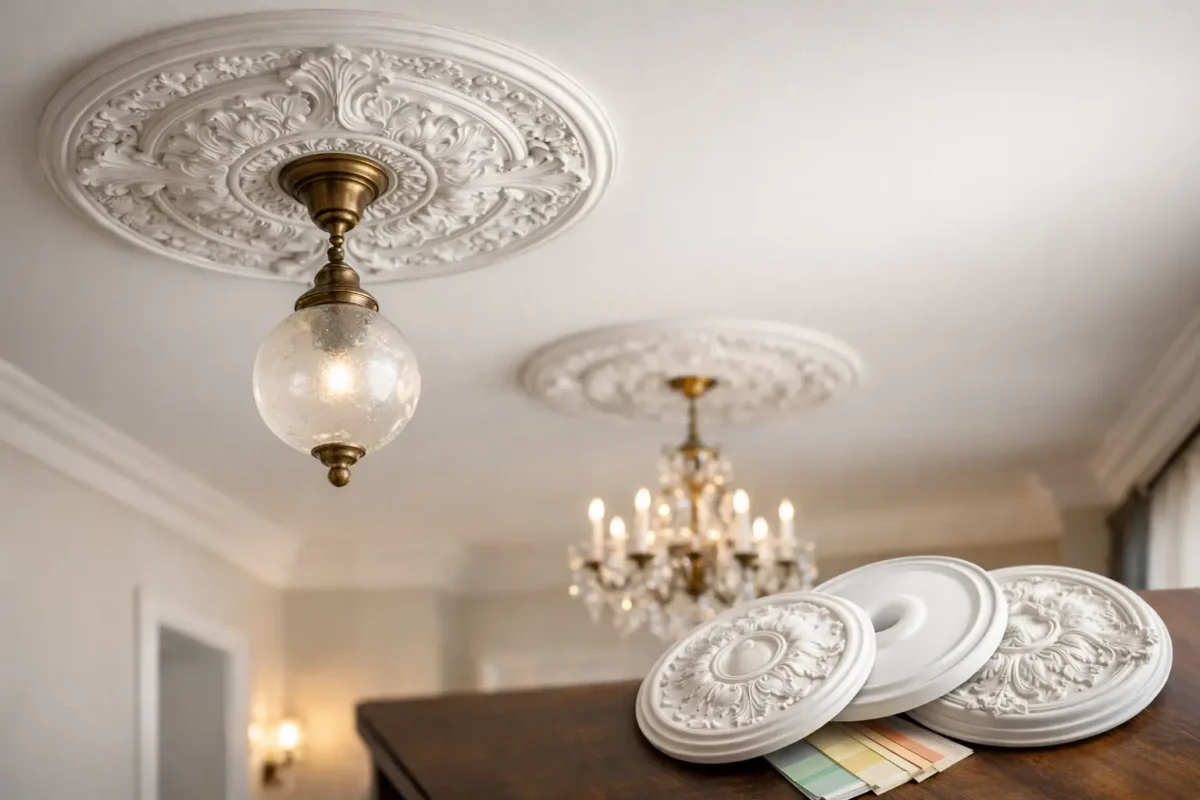
A ceiling rose can change the feel of a room faster than most people expect. Get the size or style wrong and it looks awkward straight away. Get it right and the ceiling suddenly feels finished, balanced and far more expensive. That is why ceiling roses UK buyers choose need a bit more thought than simply picking the prettiest pattern.
For homeowners, renovators and trade installers alike, the best ceiling rose is the one that suits the property, works with the light fitting, and can be installed without creating unnecessary problems on site. In many projects, especially refurbishments, practical considerations matter just as much as appearance.
What ceiling roses do well
A ceiling rose is not just a decorative extra. It creates a focal point around a pendant or chandelier, helps a plain ceiling feel more considered, and adds architectural detail without major building work. In period homes, that detail can support existing coving, cornice and other mouldings. In newer interiors, it can stop a central light point from feeling lost in an otherwise flat ceiling.
There is also a functional side. A rose can help visually tidy the area around a light fitting, especially where previous fixings, hairline cracks or uneven paint lines need covering. That does not mean using one to hide poor workmanship, but it can be a smart finishing solution when updating an older room.
Choosing ceiling roses UK properties actually suit
The UK housing stock is varied. A Victorian terrace, 1930s semi, new-build townhouse and commercial fit-out all call for different decisions. The most successful ceiling roses UK projects tend to start with proportion rather than ornament.
Start with room size and ceiling height
Large, highly decorative roses can look excellent in tall reception rooms or period properties with generous proportions. In smaller bedrooms, hallways or rooms with lower ceilings, they can feel heavy and overdone. A more restrained profile often works better.
As a rough guide, compact rooms usually benefit from simpler designs and smaller diameters, while larger spaces can carry deeper relief and wider patterns. The light fitting matters too. A substantial chandelier needs enough visual support around it. A minimal pendant often looks better with a cleaner, less ornate rose.
Match the property, not just the trend
This is where many buyers hesitate. They want decorative detail, but do not want it to feel out of place. The answer is usually to work with the age and style of the building, then simplify where needed.
In a period renovation, a traditional floral or classical design can sit naturally alongside coving and cornice. In a more contemporary interior, geometric or low-relief roses often give the right level of detail without pushing the room into a style it does not suit. There is no rule that says a modern home cannot have a ceiling rose, but the profile and pattern need to be chosen carefully.
Think about the full ceiling scheme
A ceiling rose rarely sits in isolation. If the room also includes coving, panel mouldings or decorative cornice, the rose should relate to those features. That does not mean matching every pattern exactly, but the scale and character should feel consistent.
Trade professionals usually assess this as part of the overall decorative package. Homeowners often choose room by room. Both approaches can work, but consistency across connected spaces generally gives a more polished result.
Material matters more than many buyers realise
Traditional plaster ceiling roses still have a place, particularly in specialist heritage restoration. They can look superb in the right setting. However, for many modern renovation and fit-out projects, lightweight polyurethane or similar high-performance materials are often the more practical choice.
The reason is simple. Lightweight roses are easier to handle, easier to fix overhead, and less likely to create installation complications. They are also more resistant to cracking from impact and generally better suited to busy project schedules. For decorators and installers, that can save time on site. For DIY customers, it can make the difference between a manageable project and a frustrating one.
Paintability is another advantage. A pre-primed surface helps create a cleaner route to the finished look, whether the rose is being painted bright white to blend into the ceiling or in a tonal shade to make the detail more obvious.
That said, material choice still depends on the job. In listed or highly sensitive heritage projects, plaster may remain the preferred option. In most standard residential and commercial interiors, lightweight mouldings offer a very strong balance of appearance, durability and fitting convenience.
Installation: where good results are won or lost
A ceiling rose is one of those details that looks simple once installed properly. The fitting process deserves more respect than it often gets.
Surface preparation comes first
The ceiling needs to be clean, dry and stable. Loose paint, dust and flaky areas can compromise adhesion. If the ceiling is uneven, the issue should be assessed before fitting starts. Some minor irregularities can be managed during installation and finishing, but significant movement or damage needs proper repair first.
Positioning is equally important. The rose must be centred accurately to the light point and aligned well in the room. A few millimetres out can be surprisingly noticeable, especially in formal spaces.
Adhesive and fixing approach
Using the right adhesive is essential. Decorative mouldings are only as reliable as the fixing method behind them. Professional-grade adhesives designed for this type of product help achieve a secure bond and cleaner finish. On larger or heavier designs, installers may also use additional temporary support during curing.
This is one reason specialist supply matters. Buying the rose without considering the correct adhesive, tools and finishing products can lead to avoidable problems.
Wiring and light fittings
Any work around electrical points should be handled safely and appropriately. The ceiling rose needs to integrate neatly with the chosen fitting, whether that is a simple pendant, decorative lantern or heavier statement light. Larger chandeliers may require separate structural support, as the decorative rose itself is not there to carry unsuitable loads.
For trade projects, this coordination typically happens early with electricians and fit-out teams. For homeowners, it is worth checking compatibility before ordering rather than once the fitter is on site.
Common mistakes to avoid
The most common issue is choosing a rose that is too large for the room. Buyers often assume bigger means more impressive, but scale is what creates quality. An oversized design can crowd the ceiling and make the light fitting look secondary.
Another frequent mistake is mixing styles too aggressively. An ornate rose with very plain contemporary coving can work, but it takes care. More often, a balanced level of detail gives the better result.
Poor prep is another problem. Even high-quality products can disappoint if they are fitted onto unstable surfaces or painted badly. Clean installation, careful filling and proper finishing are what create that crisp, professional look.
Are ceiling roses still in style?
Yes, but the way people use them has changed. They are no longer limited to grand period rooms or formal reception spaces. Many buyers now use them more selectively – one statement rose in a living room, dining area, main bedroom or entrance hall rather than throughout the whole property.
This selective approach often works well. It gives character where it will be noticed most, without making the scheme feel forced. In commercial interiors such as boutique hospitality or high-end residential developments, ceiling roses can also help create a stronger design identity with relatively little disruption.
Buying with confidence
When comparing options, focus on five things: size, style, material, paint finish and installation method. Those factors will have more impact on the final result than scrolling through endless decorative patterns.
A specialist supplier can make the buying process much easier by helping customers match products to room type, existing mouldings and fitting requirements. That is especially useful for trade buyers managing schedules, and for homeowners who want reassurance before committing to a decorative feature overhead. Businesses such as Coving.Online build trust by combining product knowledge with installation guidance, which is often exactly what these projects need.
If you are updating one room, start with proportion and keep the scheme cohesive. If you are specifying for a wider renovation, think about how the rose works with coving, cornice and lighting across the property. The best result is rarely the boldest option on the page. It is the one that looks like it belongs there from the start.
