

blog
Best Coving for Living Rooms and How to Choose
Sep
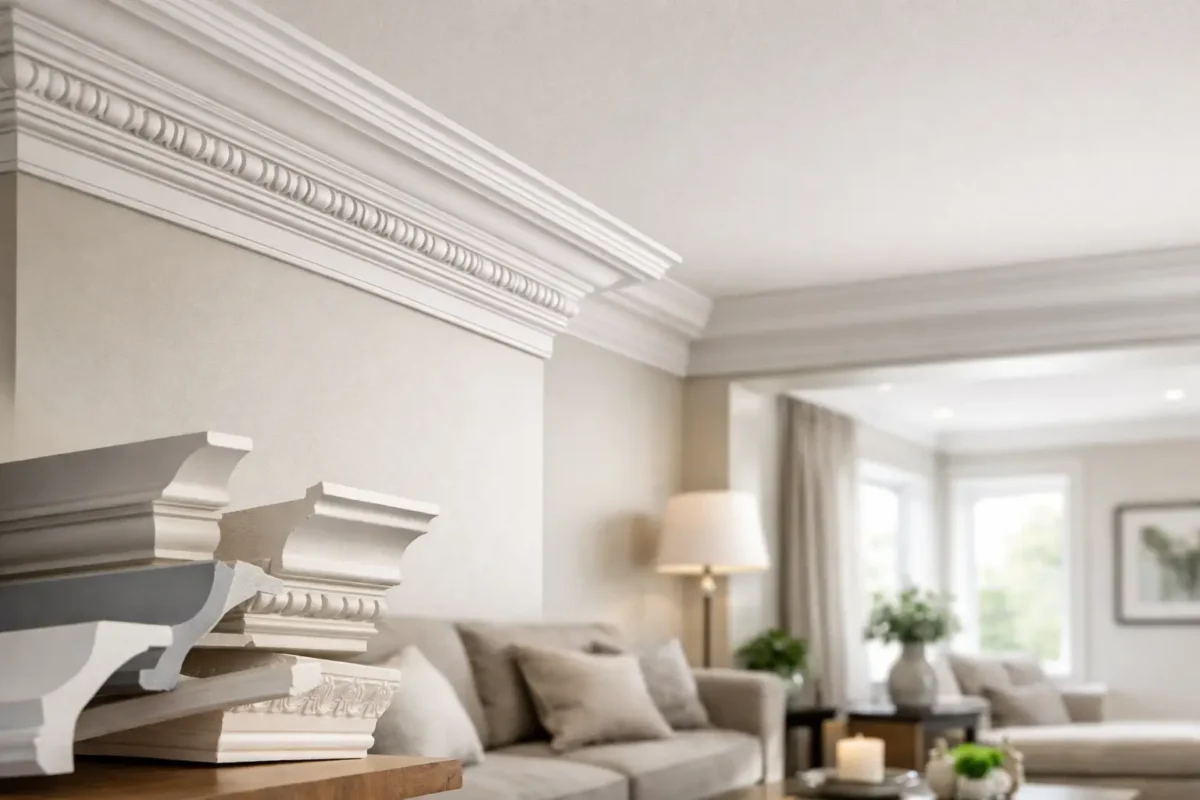
A living room can have excellent furniture, thoughtful lighting and carefully chosen colour, yet still feel unfinished where the wall meets the ceiling. The best coving for living rooms creates a deliberate transition at that junction. It softens hard lines, brings proportion to the room and gives both period and contemporary interiors a more considered finish.
The right choice is rarely about choosing the largest or most decorative profile available. Ceiling height, room width, existing architectural detail and the look you want to achieve all matter. A lightweight, paintable moulding is often the most practical route to a high-end result, particularly during renovation work where speed, clean handling and durability are priorities.
Start with the room’s proportions
Coving should look as though it belongs to the room, rather than appearing added as an afterthought. In a living room with a standard ceiling height, a medium profile usually offers the best balance. It is substantial enough to be visible from across the room, but not so deep that it lowers the perceived ceiling height.
For compact rooms or flats with lower ceilings, choose a slimmer, simpler cove. A profile with a gentle curve or restrained stepped detail gives definition without making the top of the walls feel crowded. Keeping the coving and ceiling in the same light colour can also help the room feel more open.
Higher ceilings allow more scope. In Victorian, Edwardian and other period homes, a larger cornice with a layered or linear profile can restore visual weight at ceiling level. It works particularly well where there are picture rails, ceiling roses, panelled walls or tall sash windows. The coving does not need to copy original plasterwork exactly, but it should respect the scale of the existing features.
The best coving for living rooms by interior style
There is no single profile that suits every property. The best choice depends on whether you want coving to blend into the background or become part of the room’s decorative character.
Modern and minimalist living rooms
Modern rooms generally benefit from clean geometry. A sharp, angular profile gives a crisp shadow line and suits contemporary joinery, flush doors and simple wall finishes. A shallow stepped design is often more effective than an ornate curve because it introduces architectural definition without competing with the rest of the scheme.
If your walls and ceiling are slightly uneven, avoid a very narrow profile. A little more face and ceiling coverage gives the installer more tolerance to achieve a neat finish while concealing minor imperfections at the junction.
Traditional and period-inspired spaces
For homes with fireplaces, ceiling roses, decorative architraves or original joinery, a classic cove or more detailed cornice is usually the natural fit. Look for a profile with a generous curve, a small step or a traditional projection that carries enough presence around the room.
The key is restraint. A highly elaborate cornice can look out of place in a modest sitting room, especially if the rest of the detailing is simple. Where original plaster mouldings have been removed, a well-proportioned polyurethane profile can reinstate character without the weight, mess and fragility associated with traditional plaster.
Transitional interiors
Many renovated homes sit between classic and contemporary. They may have original ceiling heights and fireplaces, but modern kitchens, new lighting and pared-back decoration. In these rooms, a timeless cove with limited ornament is often the safest choice. It softens the ceiling line and connects old and new elements without forcing the design in either direction.
Choose the material as carefully as the profile
Plaster coving has a long history, but it is heavy, brittle and less convenient to handle during refurbishment. For most domestic living rooms, premium lightweight mouldings offer a more practical alternative while retaining a refined appearance once painted.
High-density polyurethane coving is a strong choice for detailed or larger decorative profiles. It is lightweight, stable and resistant to everyday knocks, making it easier to transport, cut and fix overhead. It also arrives ready for painting, so it can be finished to match the ceiling, wall colour or a more distinctive scheme.
For simpler, hard-wearing designs, high-density polymer mouldings are another useful option. Both materials are particularly suited to renovation projects because they can be fitted without the disruption of wet plasterwork. They are also easier to manage when working alone or in occupied homes.
For a professional result, use the correct adhesive for fixing and jointing. Adhesive choice affects both initial grab and the quality of the finished joins, so it should be treated as part of the system rather than an afterthought. Coving.Online supplies authentic Orac Decor mouldings alongside the adhesives and practical support needed to complete the job properly.
Consider LED coving before finalising your lighting plan
LED coving can transform a living room, but it works best when planned early. These profiles incorporate a recess that conceals an LED strip and directs light upward, downward or across the wall. The result is indirect illumination that can make a ceiling appear higher and create a calmer evening atmosphere.
Upward-facing light suits contemporary rooms and works especially well around the full perimeter of a ceiling. Downward-facing light can emphasise textured wall finishes, panelling or artwork, although it needs careful positioning to avoid highlighting uneven surfaces. In a television room, indirect LED lighting can provide useful ambience without glare on the screen.
Allow for the LED channel, driver location, cable route and access for maintenance before installation begins. The coving profile determines the direction and spread of light, while the quality of the LED tape determines how even the illumination looks. A deeper light trough is not automatically better – it depends on the effect you want and how far the profile sits from the ceiling or wall.
Match coving with the rest of the room
Coving looks most convincing when it relates to other mouldings in the space. If you have tall skirting boards and substantial door architraves, a very small ceiling profile may feel disconnected. Conversely, large decorative cornice above narrow modern skirting can make the room feel top-heavy.
You do not need matching patterns throughout. Instead, aim for a shared level of visual weight. Clean-lined skirting works well with a simple stepped coving; traditional ogee skirting can support a more curved cornice. Ceiling roses can add a focal point around a pendant, but they should be proportionate to both the light fitting and the room.
Paint finish matters too. Painting coving and ceiling in the same colour creates a quieter, more expansive effect. Painting the coving with the walls can make it feel more architectural and draw attention to the profile. A contrasting colour is bolder and can be effective in a carefully designed scheme, but it will expose every joint and edge, so preparation needs to be excellent.
Fitting details that protect the final result
Even premium coving needs accurate fitting. Before ordering, measure every wall run and include a sensible allowance for mitres, offcuts and any errors around chimneys, bay windows or alcoves. Check the walls and ceiling with a straightedge where possible. Older properties often have irregular corners, and this can influence both profile choice and the amount of preparation required.
Mark a consistent guide line around the room before applying adhesive. Dry-fitting lengths first helps identify the best sequence for joints and corners. Use a fine-tooth saw and an appropriate mitre box or cutting tool for clean cuts, then remove excess adhesive immediately with a damp cloth where the product guidance permits.
Once fixed, joints and small gaps should be filled, sanded lightly when dry and primed if required before painting. Lightweight mouldings are forgiving, but rushing this finishing stage is the quickest way to lose the crisp result the profile is designed to deliver. For complex layouts, high ceilings or LED installations, professional fitting support can be worthwhile.
The best living room coving is the profile that suits the scale of your home, supports your lighting and works with the details already in place. Choose a quality lightweight moulding, give equal attention to preparation and finishing, and the ceiling line will become one of the features that quietly makes the whole room feel complete.
