

blog
Period Property Coving Ideas That Respect the Home
Jul
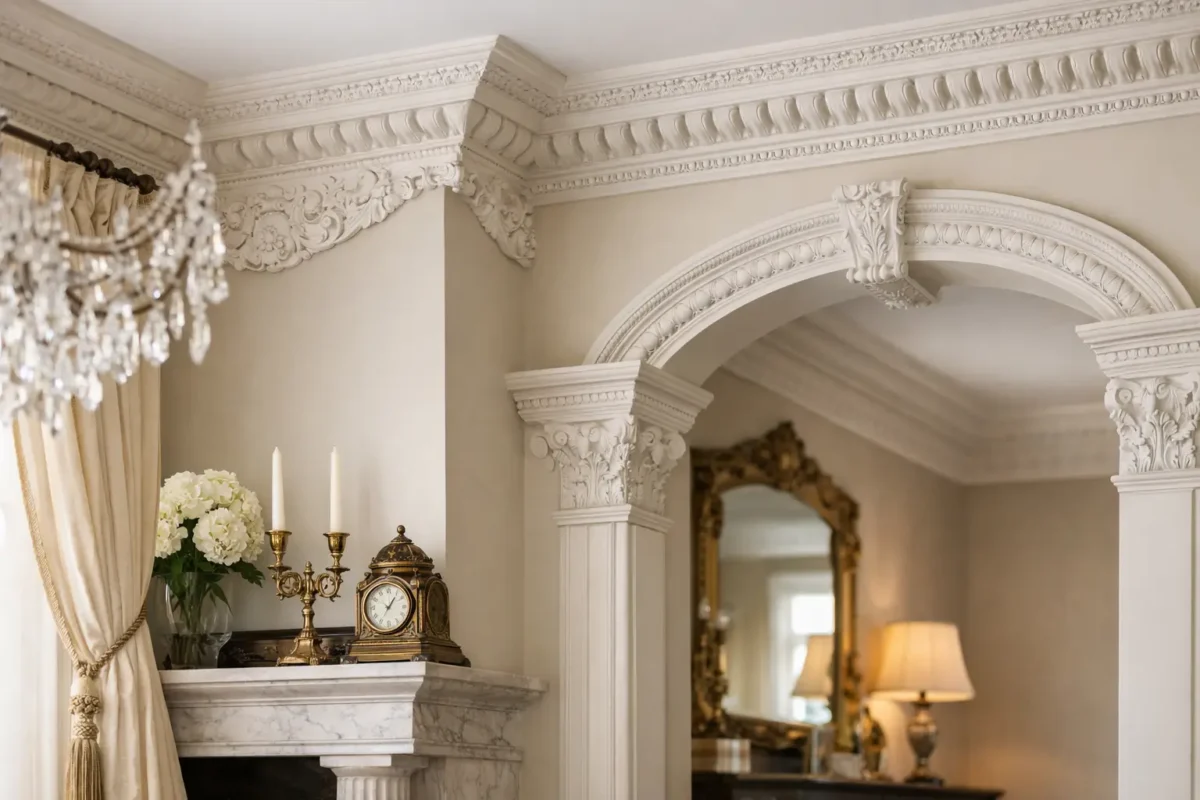
A shallow, undersized strip at the ceiling line can make a Victorian sitting room feel oddly unfinished. Equally, an elaborate cornice fitted into a modest Edwardian bedroom can overwhelm the room completely. The best period property coving ideas begin with proportion: choosing a profile that looks as though it belongs to the building, while solving the practical realities of a modern renovation.
Original plaster cornices are worth retaining wherever they are sound, but many period homes have lost their detail through previous alterations, suffered water damage, or have uneven walls and ceilings that make repairs difficult. Lightweight polyurethane coving offers a practical route back to architectural character. It is crisp, durable, paintable and considerably easier to handle than traditional plaster, without requiring the whole project to be planned around heavy, fragile lengths.
Start with the room, not the catalogue
Coving should respond to a room’s scale, ceiling height and existing joinery. Before selecting a design, look at the details already present: ceiling roses, picture rails, skirting boards, architraves, fireplaces and panelled doors. These elements create a visual language. The coving does not need to copy every curve exactly, but it should feel compatible with them.
In a typical Victorian terrace with ceilings around 2.4 to 2.7 metres, a medium-depth profile often gives the most convincing result. It creates a proper transition from wall to ceiling without reducing the apparent height of the room. Higher ceilings can take a deeper cornice with more projection, especially in principal rooms such as lounges, dining rooms and entrance halls.
Smaller rooms need more restraint. A simple concave or stepped profile can sharpen the ceiling line in a box room, cloakroom or narrow landing without making it feel enclosed. In these spaces, the aim is rarely grandeur. It is a clean, considered finish that removes the abruptness of a plain ceiling junction.
Period property coving ideas by architectural style
There is no single Victorian or Georgian profile. Homes were built over long periods, altered repeatedly and finished to very different budgets. Treat style as a useful guide rather than a rigid rule.
Georgian homes: elegant and measured
Georgian interiors tend to suit crisp geometry, controlled curves and balanced proportions. In a formal reception room, a classic ogee or dentil-inspired cornice can work well where there is evidence of original decorative detail elsewhere. For less formal spaces, a clean, generous cove with a small stepped edge often looks more appropriate than an overly ornate design.
A ceiling rose is especially effective in a Georgian-style room, but it should be proportionate to both the ceiling and the light fitting. A large decorative rose above a small pendant can look disconnected. Where original mouldings remain in one room but not another, use the surviving detail as the reference point for new work.
Victorian homes: more depth and decoration
Victorian properties often have the ceiling height to carry deeper coving. Italianate curves, layered profiles and subtle floral detailing can all be appropriate, particularly in front reception rooms and hallways. That said, the architecture of a modest late-Victorian terrace may be much plainer than that of a larger villa.
If the house has high skirting, a picture rail or an ornate fireplace, choose coving with enough presence to hold its own. A profile with a defined lower edge can give the room structure and prevent the ceiling treatment from appearing vague. In rooms that have been simplified over time, a medium Victorian-style cornice is usually more convincing than adding elaborate ornament with no connection to the rest of the house.
Edwardian homes: lighter, cleaner profiles
Edwardian interiors often sit between Victorian richness and the cleaner lines that followed. Coving can still be substantial, but profiles generally benefit from a less fussy feel. Shallow steps, soft curves and restrained linear details work particularly well alongside timber joinery, tiled fireplaces and early twentieth-century wall panelling.
This is also a good setting for combining coving with a picture rail. The gap between the two should be intentional, not an accidental narrow strip. In taller rooms, placing the picture rail at a traditional height can help preserve the vertical proportions of the walls while allowing a decorative paint treatment below.
Restore the look without the drawbacks of plaster
Traditional plaster remains an excellent material for specialist restoration, especially when matching a rare surviving profile. However, it is heavy, brittle and usually requires more involved handling, fixing and finishing. For many renovation projects, particularly those with several rooms to complete, lightweight polyurethane mouldings are the more practical choice.
Quality polyurethane coving has a sharp surface definition and arrives ready for painting. It will not crack in the same way as plaster when subjected to minor knocks, and its low weight makes overhead fitting more manageable for competent DIY installers and faster for trade teams. It is also useful where access is difficult, such as upper-floor rooms, stairwells and properties with limited parking or narrow hallways.
The material does not remove the need for careful preparation. Walls and ceilings should be dry, reasonably sound and free from loose paint. A good adhesive, clean mitres and a measured setting-out line make a much greater difference than trying to disguise poor fitting with excessive filler. For larger profiles, long runs or rooms with noticeably uneven surfaces, professional installation support can save time and deliver a cleaner finish.
Use coving to solve real renovation problems
Decorative mouldings are not only about recreating heritage style. They can make awkward junctions look intentional. Older homes commonly have slight movement, out-of-square corners and ceiling lines that reveal every imperfection once painted. A well-chosen coving profile can soften those transitions and provide a more forgiving visual edge.
In a room where a new ceiling has been installed below an original one, coving can help bridge the changed perimeter. It can also conceal small gaps left after plastering or electrical work, provided those gaps are stable and suitably prepared. It should not be used to cover active damp, significant cracking or structural movement. Deal with the underlying issue first, then fit the moulding to a sound surface.
For a more contemporary interpretation, consider a simple profile paired with discreet LED lighting. Indirect light can highlight ceiling height and add atmosphere in a sitting room, bedroom or boutique commercial interior. In a period property, keep the profile understated and position the lighting so the effect supports the architecture rather than turning the ceiling into the main event.
Paint choices that make coving look established
The traditional approach is to paint coving and ceiling in the same colour, usually a soft white or off-white. This helps the moulding read as part of the ceiling plane and is a dependable choice for lower ceilings. A matt or low-sheen finish is generally preferable, as it avoids drawing attention to minor irregularities.
Where ceilings are high and the room has strong architectural detail, painting the coving in the wall colour can create a more enveloping effect. This works particularly well with muted heritage shades, darker dining rooms and hallways. The key is consistency: coving painted a third, unrelated colour can make even a well-proportioned profile look like an afterthought.
Do not forget the order of work. Fit, fill and sand the coving before final decorating, then apply a proper primer where required and two finish coats for an even appearance. Freshly painted mouldings should look integrated, not merely added on.
Choosing the right profile with confidence
When comparing samples, hold them against the wall and ceiling rather than judging them flat on a screen or worktop. Look at their drop, projection and shadow line from across the room. A profile that appears modest in isolation may feel far more substantial once it runs around all four walls.
For renovation projects that need authentic-looking, practical mouldings, Coving.Online can help homeowners and trade customers compare lightweight Orac Decor profiles with the scale and character of their space. Ordering samples before committing is particularly worthwhile in period homes, where the right proportion matters more than the most decorative design.
The most successful coving does not compete with a period property’s character. It quietly restores the sense that the walls, ceiling and joinery were always designed to belong together.
